Common Causes And Treatment of Tmj/Tmd
TMJs are the most complicated joints in the human body. Temporomandibular is a joint that links your lower jaw to the temporal bones of the skull. Its primary function is to allow you to move your jaw up-down and side to side for better talk, yawning and chewing.
This means when these joints are not synchronized in movement or aligned correctly, and many issues may occur. If you are facing it, it’s best to opt for TMJ/TMD Treatment in Wilmington, MA.
What Are Temporomandibular Disorders?
Temporomandibular disorders mean issues with temporomandibular joints, jaw muscles, and nerves in your face. Any issue that prevents the complex system of bones, muscles, and joints from working together may lead to TMD.
Causes of TMD:
Dentists believe that TMD symptoms occur from issues with jaw muscles or other parts of the joint. For example, injury to the joint, jaw, and muscles of the neck and head can result in TMD.
Other causes include:
- Joint arthritis
- Bruxism that puts plenty of pressure on the joint
- Disc movement between the joint ball and socket
- Stress that can force you to tighten the jaw and facial muscles or clench the teeth
What Are the Symptoms?
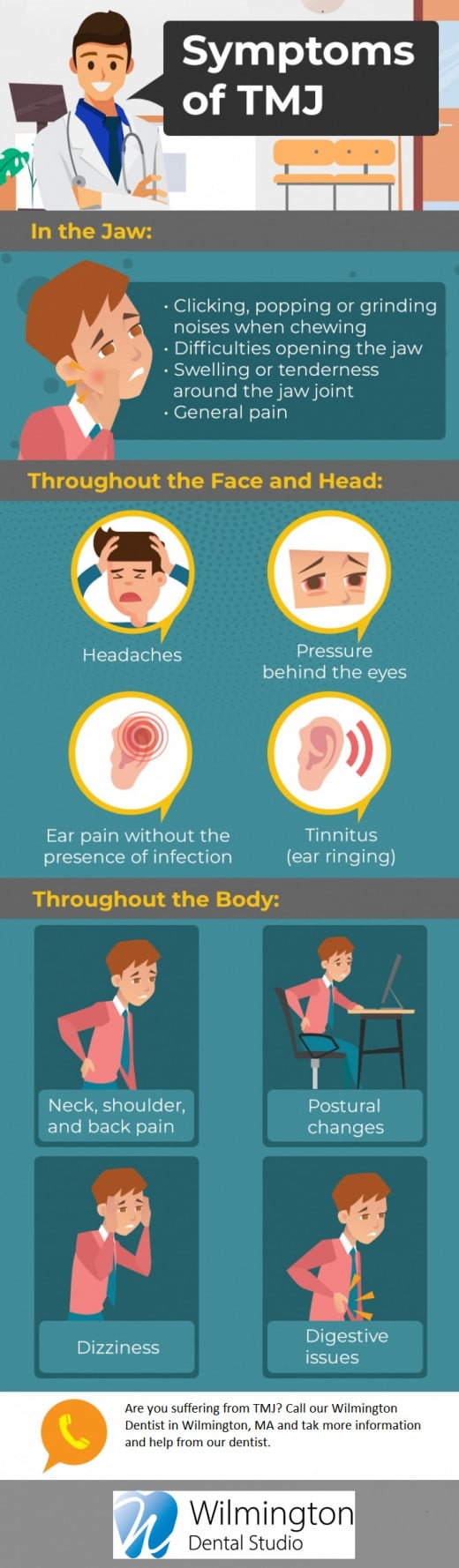
Common TMD symptoms include:
- Severe ache and discomfort in your neck, jaw joint region, face and shoulders, and in or around the ear when you speak, chew or open your mouth wide
- Tiredness or swelling on the side of your face
- Jaws that get lock in closed or open mouth position
- Popping or annoying sound in the jaw joint on opening or closing your mouth
- Difficulty in chewing food or a sudden uncomfortable bite
You may also have:
- Toothaches
- Dizziness
- Headache
- Neck pain
- Upper shoulder pain
- Earaches
- Tinnitus
- Hearing issues
Perform the best tmj treatment near me search on Google, and it will suggest the top quality TMJ treatment near your location.
Types of TMD:
TMD is classified as follows:
1. Myofascial Pain
Myofascial is a chronic disorder. It causes continuous pain and discomfort in the fascia and muscles that control neck, jaw, and shoulder functioning.
2. Internal Joint Derangement
Internal Joint Derangement means displaced disk, dislocated jaw, or injury to the condyle.
3. Degenerative Joint Disease
Degenerative joint diseases include osteoarthritis or rheumatoid arthritis (RA) in the jaw joint. Both of them get worse with time.
TMD Treatment Options
Every Wilmington tmj dentist strives hard to offer superior quality dental care to you and your family. Services are also available in other locations such as Andover, Stoneham, Woburn, Wakefield, Burlington, Billerica, Reading, and Tewksbury. The experts will give out the best treatment based on:
- Your age
- Your overall health and medical history
- How much time will your condition take?
- How well you can handle particular procedures, medications, or therapies
Different treatment options include:
1. Ultrasound
Ultrasound is deep heat applied to the joint of the patient if it is sore or unable to move correctly. It is typically used along with physical therapy.
2. Acupuncture
Acupuncture is also quite beneficial in relieving the pain, inflammation, and stress associated with Temporomandibular Joint Disorders.
3. Trigger-Point Injections
In this therapy, emergency dentist Wilmington MA injects the anesthetic or pain medicine into the facial muscles to keep pain at bay.
4. Transcutaneous Electrical Nerve Stimulation
TENS is also a treatment used for the TMD management of TMD. It uses controlled exposure of low-level electrical currents to the jaw joint and face muscles. It is typically used to offer pain relief and muscle relaxation.
5. Surgery
Doctors usually advise surgery if you face persistent pain and have limited jaw opening. The most famous is open-joint surgery. It helps to repair or replace the joint.
However, this surgery involves more risks than other options. So make sure you consider it carefully and only after discussing the pros and cons.


Comments
Post a Comment